Legacy Software Maintenance & Upgrades for Stable, Secure, and Modern-Ready Systems
Legacy software systems carry significant operational weight. For many organizations, they underpin core business functions — managing transactions, supporting workflows, and maintaining data integrity across departments. When they begin to show signs of strain, the consequences extend beyond technical inconvenience. Risk rarely appears all at once. Performance slows incrementally. Workarounds accumulate. Deferred updates increase exposure. Over time, what once operated reliably becomes a growing source of operational fragility.
 NDA ProtectedClient-Owned IPEnterprise ArchitectureNDA ProtectedClient-Owned IPEnterprise ArchitectureNDA ProtectedClient-Owned IPEnterprise Architecture


Built for IT leaders and operations teams responsible for maintaining business-critical legacy systems while planning safe, phased modernization.

Challenges Organizations Face with Legacy Software
Our Legacy Software Maintenance & Upgrades Services
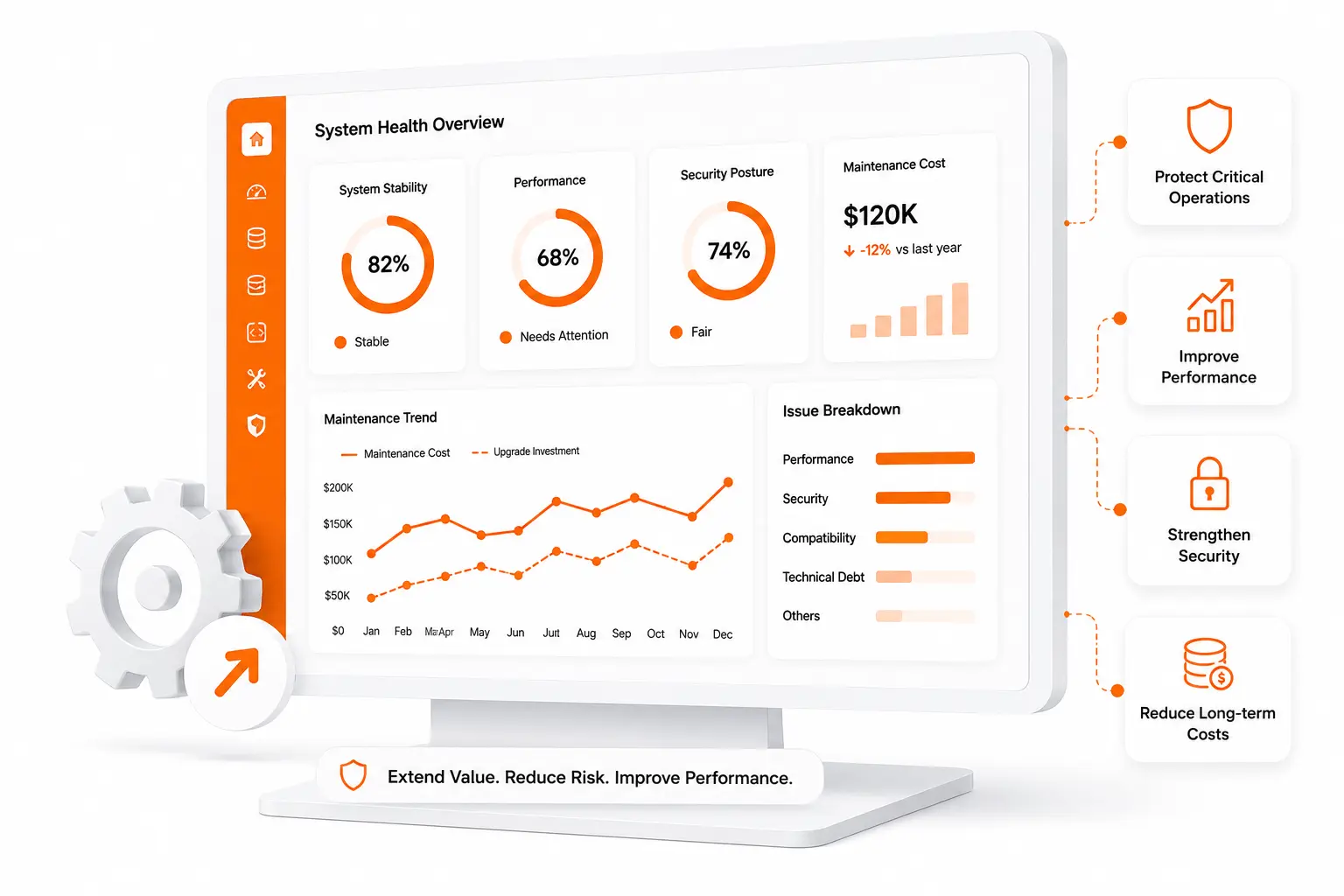
Effective legacy software maintenance extends beyond keeping systems operational. It requires a structured approach to managing risk, reducing technical debt, and planning improvements that preserve business continuity.
System Health Assessments
We evaluate technical architecture, code quality, dependency management, and integration points to establish what is functioning reliably, what is accumulating risk, and what requires immediate attention. This creates a factual foundation for maintenance planning based on evidence rather than assumptions.
Preventive Maintenance
Patches are applied, performance bottlenecks are resolved, and inefficiencies that degrade reliability are corrected before they escalate into operational failures. This reduces the frequency of unplanned downtime and protects operations from avoidable disruption.
Security Hardening and Compliance Upgrades
We implement security patches, strengthen access controls, and ensure systems meet regulatory requirements relevant to the organization. This reduces exposure and maintains the defensibility of sensitive data as threat environments continue to evolve.
Infrastructure Modernization
Legacy infrastructure degrades independently of the software it supports. Servers, middleware, hosting environments, and network configurations accumulate risk over time — and that risk compounds when they go unreviewed. We assess the underlying environment, identify what is creating instability, and make targeted improvements in planned phases. Operations continue without interruption while the foundation becomes more reliable.
Technology Upgradation
Libraries go unsupported. Frameworks reach end-of-life. Dependencies that were standard practice several years ago become a liability without regular review. We identify what is approaching or past its support window and replace it with maintained alternatives that fit within the existing system architecture. The system remains functional throughout, and the changes are made without requiring structural redesign.
User Experience Modernization
Interfaces built years ago were designed for the workflows and expectations of that time. As operations evolve, those interfaces create unnecessary friction — slowing down routine tasks and increasing the effort required from the people using them daily. We improve navigation, usability, and accessibility within the constraints of the existing system. The underlying application logic is not replaced, but the experience of working within it becomes more efficient.
Continuous Upgrades
Deferred updates do not disappear — they accumulate. Each skipped patch or postponed dependency update adds to the backlog that eventually requires urgent remediation. We maintain a regular schedule of incremental improvements, applying updates before they become overdue and addressing emerging issues before they affect operations. This keeps systems stable between larger planned upgrade cycles.
Controlled Modernisation Initiatives
Targeted improvements within defined scope extend system life without initiating full architectural transformation. This includes refactoring high-risk components, updating deprecated dependencies, or implementing incremental enhancements that improve operational stability.
Technical Debt Reduction & Performance Optimization
Every workaround added to a codebase makes the next change harder. Over time, accumulated debt raises the cost of routine maintenance and increases the risk that any modification introduces new problems. We refactor fragile components, remove redundant functionality, and establish clearer system architecture. This reduces the cost of ongoing maintenance and improves performance, stability, and the reliability of future changes.

For organisations requiring dedicated development capacity for ongoing software maintenance, we also offer the option to hire software developers who specialise in legacy system environments.
When to Choose Legacy Software Maintenance & Upgrades
When Maintenance and Upgrades Are the Right Approach
Legacy software maintenance is the correct path when existing systems still support critical operations but are showing signs of strain — rising maintenance costs, performance decline, security exposure, or growing difficulty implementing changes. It is the right choice when the system's core functionality remains sound and the cost of full replacement exceeds the value of structured improvement.
When System Replacement Becomes Necessary
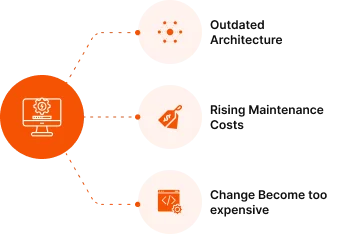
Maintenance is not the right path when the system's architecture fundamentally prevents it from supporting current operations, when accumulated debt makes every change disproportionately expensive, or when maintenance costs consistently exceed the value delivered. In those cases, controlled migration or replacement — planned with the same discipline — is the more effective investment.
Consulting-Led Maintenance Approach
Moving from Reactive Fixes to Structured Maintenance Strategy
Reactive maintenance addresses symptoms but rarely reduces the structural risk aging systems accumulate. Our approach begins with assessment and planning rather than immediate remediation.
Risk Assessment
We evaluate technical architecture, dependency chains, security posture, and performance constraints to determine what requires intervention and in what sequence. The assessment establishes where failures would carry the greatest operational consequence.
Phased Improvement Planning
Changes are implemented in a controlled sequence that protects operational continuity. Where appropriate, this also includes evaluating AI-driven enhancements that can improve system efficiency without introducing architectural risk. Governance protocols guide scope, timing, and rollback procedures, ensuring changes remain aligned with production requirements and do not introduce new instability.
Testing, Validation, and Ongoing Monitoring
Regression testing ensures existing functionality remains intact. Performance benchmarking verifies measurable benefit. Ongoing monitoring tracks system health, identifies emerging issues early, and ensures preventive measures are taken before problems affect operations.
Risk Assessment
We evaluate technical architecture, dependency chains, security posture, and performance constraints to determine what requires intervention and in what sequence. The assessment establishes where failures would carry the greatest operational consequence.
Phased Improvement Planning
Changes are implemented in a controlled sequence that protects operational continuity. Where appropriate, this also includes evaluating AI-driven enhancements that can improve system efficiency without introducing architectural risk. Governance protocols guide scope, timing, and rollback procedures, ensuring changes remain aligned with production requirements and do not introduce new instability.
Testing, Validation, and Ongoing Monitoring
Regression testing ensures existing functionality remains intact. Performance benchmarking verifies measurable benefit. Ongoing monitoring tracks system health, identifies emerging issues early, and ensures preventive measures are taken before problems affect operations.
Reactive maintenance resolves symptoms without addressing structural causes. Our approach applies structured assessment, phased planning, and validated execution so improvements reduce risk without compromising live operations.


Engagement Models We Offer
Legacy software maintenance requirements vary by system complexity, operational criticality, and the degree of modernization planned. We structure engagements to align with how organisations budget, prioritise risk, and execute improvements over time.

Dedicated Software Maintenance Developers
For projects with evolving requirements that cannot be fully defined upfront, dedicated maintenance developers provide the continuity and codebase familiarity that rotating teams cannot. This model is the right fit when legacy systems require ongoing monitoring, proactive issue resolution, and incremental improvement that benefits from sustained team involvement. Developers operate as an extension of your operations team, building context over time that directly improves response quality and decision speed.

Project-Based Development
When scope is clearly defined, timelines are fixed, and the objective is a specific upgrade, security hardening initiative, or performance optimization effort, project-based development delivers predictable outcomes against agreed milestones. This model works when requirements are bounded, the deliverable is specific, and the team does not need ongoing maintenance engagement beyond the project.

Consulting & Advisory Engagement
When the decision between maintaining, upgrading, or replacing a system is unresolved, or when teams need to understand system condition before committing resources, a consulting engagement provides the evaluation framework to make that call with confidence. This model covers risk assessment, system health analysis, and strategic planning — helping organisations avoid committing to a maintenance or upgrade path before the evidence justifies it.

Flexible Engagement Approach
Not every legacy system follows a predictable maintenance trajectory. A targeted upgrade project may reveal deeper structural issues requiring ongoing support, or an initial assessment may lead directly into remediation work. We structure engagements to accommodate that shift without requiring new vendor relationships, knowledge transfer, or re-onboarding — allowing teams to move between delivery models without losing momentum or system context.
Technologies and Platforms We Support
Legacy environments vary considerably in architecture, age, and constraint. Our support is guided by what each environment requires to remain stable and secure.
Technologies, Platforms & Tools We Work With
Technology selection is determined by existing system architecture, vendor support status, and long-term maintainability — not by trend adoption. The following reflects the range of environments we work within, applied where each is the most appropriate fit for the system and objective in scope.
Emerging Tech
AI & ML — applied selectively for automation, anomaly detection, and predictive maintenance where system architecture supports it.


Front End
Angular · React · Next.js · Vue.js


Back End
Node.js · Nest.js · Meteor.js · .NET · Express · PHP · Python


Frameworks
Laravel · Filament · Livewire · CodeIgniter · CakePHP


Databases
MySQL · SQLite · Oracle · Firebase · DynamoDB · MongoDB · SQL Server · PostgreSQL


Cloud
AWS · Azure · GCP · Heroku


Each engagement begins with an assessment of the existing environment. Technology decisions follow from that evidence — ensuring recommendations serve system stability and operational continuity, not an arbitrary preference for newer tools.

Enterprise and Custom-Built Systems
We work with enterprise systems across database platforms, application servers, mainframe environments, and custom-developed software. Maintenance strategies are designed around the specific technologies in use and the vendor support status of those technologies.

End-of-Support and Aging Platforms
Where vendor support has ended or platforms have aged beyond active maintenance cycles, we implement targeted measures to reduce risk — including security hardening, controlled upgrade pathways, and workarounds that maintain system viability without forcing immediate replacement.

Integration with Modern Systems
We design integration architectures that allow data exchange, process automation, and reporting between legacy and modern systems without requiring structural changes to core legacy applications.

Why Choose NebulaTech for Legacy Software Maintenance & Upgrades
Our approach to legacy maintenance prioritizes risk reduction, live system stability, and controlled improvement over reactive problem-solving.
The difference is not in development capability alone, but in how decisions are structured before development begins.
NDA-First Engagement and Client Ownership


NDA-first engagement protects sensitive operational details, proprietary configurations, and strategic planning discussions from disclosure. All assessment findings, architectural documentation, and improvement recommendations remain confidential and fully owned by the client.
Risk-Controlled Execution
Long-Term Maintenance Planning
NDA-First Engagement
and Client Ownership
Risk-Controlled
Execution
Long-Term Maintenance
Planning
NDA-first engagement protects sensitive operational details, proprietary configurations, and strategic planning discussions from disclosure. All assessment findings, architectural documentation, and improvement recommendations remain confidential and fully owned by the client.
The outcome of a well-managed legacy engagement is predictable: reduced unplanned downtime, more stable performance, and a clearer path toward modernization when the time is right.
Cost of Legacy Software Maintenance & Upgrades
What Determines Legacy Software Maintenance Cost
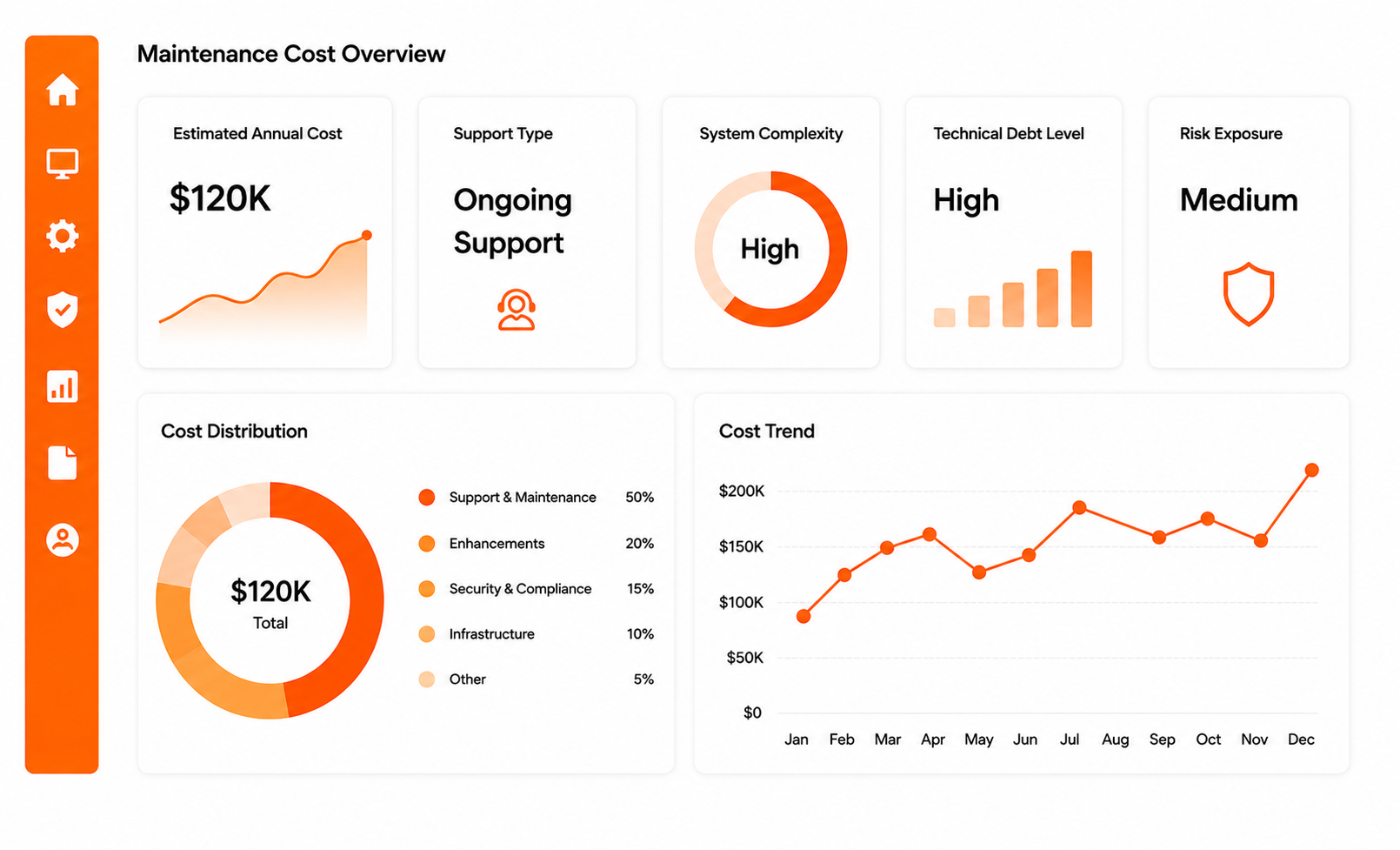
The cost of legacy software maintenance depends on system complexity, the scope of accumulated technical debt, security and compliance obligations, and whether the engagement involves ongoing support or targeted upgrade work. Routine monitoring and patching carries a different cost profile than comprehensive refactoring or phased modernisation that touches multiple system layers.
Key Factors That Influence Total Investment

Documentation Availability
Well-documented systems reduce maintenance effort, troubleshooting time, and implementation risk.

Integrated Dependencies
The number of connected services, APIs, and third-party systems increases operational and maintenance complexity.

Vendor Support Status
Technologies with active vendor support are easier, safer, and less costly to maintain over time.

Architecture Clarity
Structured architecture and organized codebases simplify updates, monitoring, and long-term maintenance.

Legacy Knowledge Dependency
Lost institutional knowledge requires additional discovery work before changes can be implemented safely.

Assessment-Based Cost Planning
Transparent estimates based on technical assessments help align maintenance budgets with measurable priorities.